


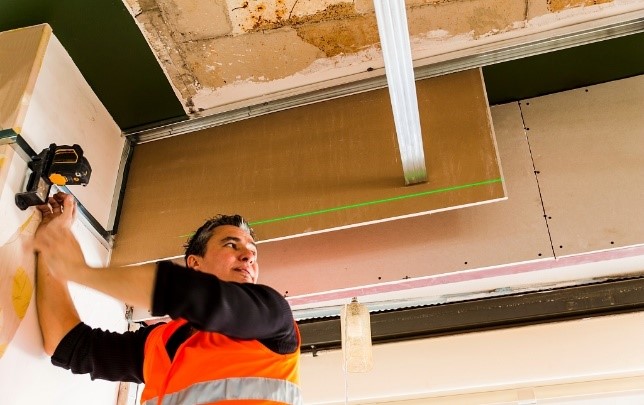
When choosing a laser level for a professional product line, the decision between a red and green laser is not simply about beam color. Beam visibility, working environment, power consumption, product cost, and the target market can all affect which configuration makes more sense.
For indoor applications with controlled lighting, red laser levels can provide a practical and cost-efficient solution. Green laser levels are generally easier to see in brighter working environments, making them attractive for professional users who need better beam visibility across larger or more demanding jobsites.
For brands, distributors, and construction-tool suppliers, the better question is not “Which laser color is better?” but “Which beam configuration fits the application, price position, and product strategy?”
This guide compares red and green laser levels from a product-selection and application perspective, helping buyers decide when each option is appropriate.
What should we know about rangefinders before buying?

Red vs Green Laser Level: Key Differences
| Factor | Red Laser Level | Green Laser Level | B2B Buying Consideration |
|---|---|---|---|
| Beam visibility | Good for indoor work | Better visibility in bright environments | Choose according to target applications |
| Typical positioning | Entry to mid-range | Mid-range to professional | Affects product portfolio positioning |
| Power demand | Generally lower | Generally higher | Battery capacity should match the configuration |
| Product cost | Usually more economical | Usually higher | Consider target retail price and margin |
| Indoor applications | Excellent | Excellent | Both can work well in controlled lighting |
| Bright jobsite conditions | More limited | Easier to see | Green can be advantageous for professional users |
| Battery requirements | Lower power demand can support longer runtime | May require higher-capacity battery solutions | Important for cordless product development |
| Product-line strategy | Suitable for value-focused models | Suitable for visibility-focused professional models | Select according to market positioning |

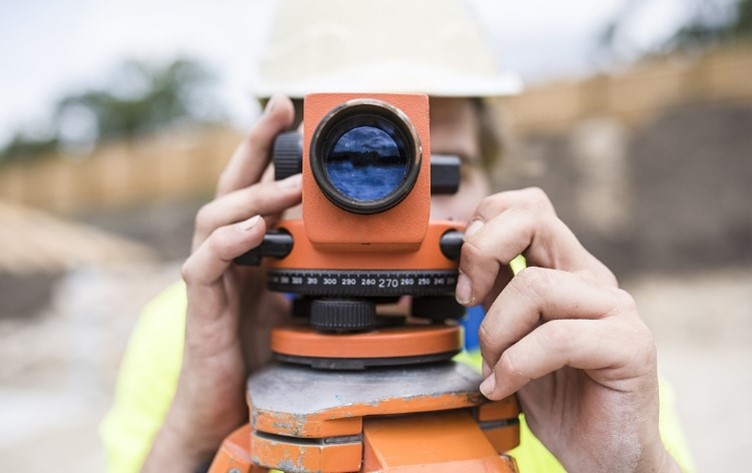
During the work, Emit electromagnetic pulses. The laser beam is reflected from the surface and returned to the body of the tool. Next, the rangefinder's internal systems automatically process the speed of light and measure the distance. The device records the distance of the measurement target by emitting laser signals and reflecting electromagnetic waves. This measurement method is how the laser rangefinder works.
How Red and Green Laser Levels Affect Product Selection
For B2B buyers, beam color can influence more than visibility. It can also affect the product's target price, battery configuration, positioning, and intended market.
Red Laser: A Practical Choice for Value-Focused Models
Red laser levels can be a sensible option when the product is mainly intended for indoor renovation, basic alignment, or price-sensitive users. Lower power requirements can also make battery management easier when long runtime is an important product requirement.
For brands building an entry-level or cost-controlled laser level range, red beam technology can therefore remain commercially relevant.
Green Laser: Better Visibility for Professional Applications
Green laser levels are generally easier for the human eye to see, particularly in brighter working environments. This can make them attractive for professional construction, installation, and layout applications where beam visibility directly affects the user's working experience.
For a professional product line, green beam models can also be positioned as a higher-specification option rather than simply a different color version.
The Better Choice Depends on Product Positioning
There is no universal winner between red and green laser levels. The appropriate configuration depends on the intended application, target users, selling price, battery system, and overall product positioning.
For B2B buyers, the key is to match the beam configuration with the market rather than selecting a color based only on visibility.

When Should You Choose a Red or Green Laser Level?
Choose a red laser level when the product is mainly designed for:
Indoor renovation and general alignment
Cost-sensitive product ranges
Entry-level and mid-range tool portfolios
Applications where extreme beam visibility is not the primary requirement
Choose a green laser level when the product is mainly designed for:
Brighter indoor environments
Professional construction and installation
Users who prioritize beam visibility
Higher-specification product lines
Applications where visibility across larger working areas is important
For OEM and ODM projects, the beam color should be considered together with line configuration, battery type, operating range, housing design, accessories, and target market requirements.
However, in terms of stability, the stability of red light will be better, and it will not be affected by weather, environment, and some other factors. Green light will sometimes cause performance degradation due to special weather.
In the part of work continuity, red light is better and consumes less power. Green light is more dependent on large-capacity batteries, while using the green line laser distance meter, better can match with lithium batteries or rechargeable batteries.

More Information
If you want to see the thickness of the laser, the line of red light is normal and thinner, and the line of green light is thicker. Of course, there are also some strong Red light type is also thicker, and some lasers are much thicker and scattered than the Green Line Laser. It has to compare with quality of the light source.
For brands developing a customized laser level range, beam color is only one part of the product specification. Other decisions such as line configuration, laser diode selection, battery system, and self-leveling performance should be evaluated together during OEM/ODM development.


